Small bathroom
Narrow under-sink organizers for small bathrooms: fit guide
Enter your vanity door opening, clear width, depth, and height to find the largest organizer envelope, then check current exact retailer listings.
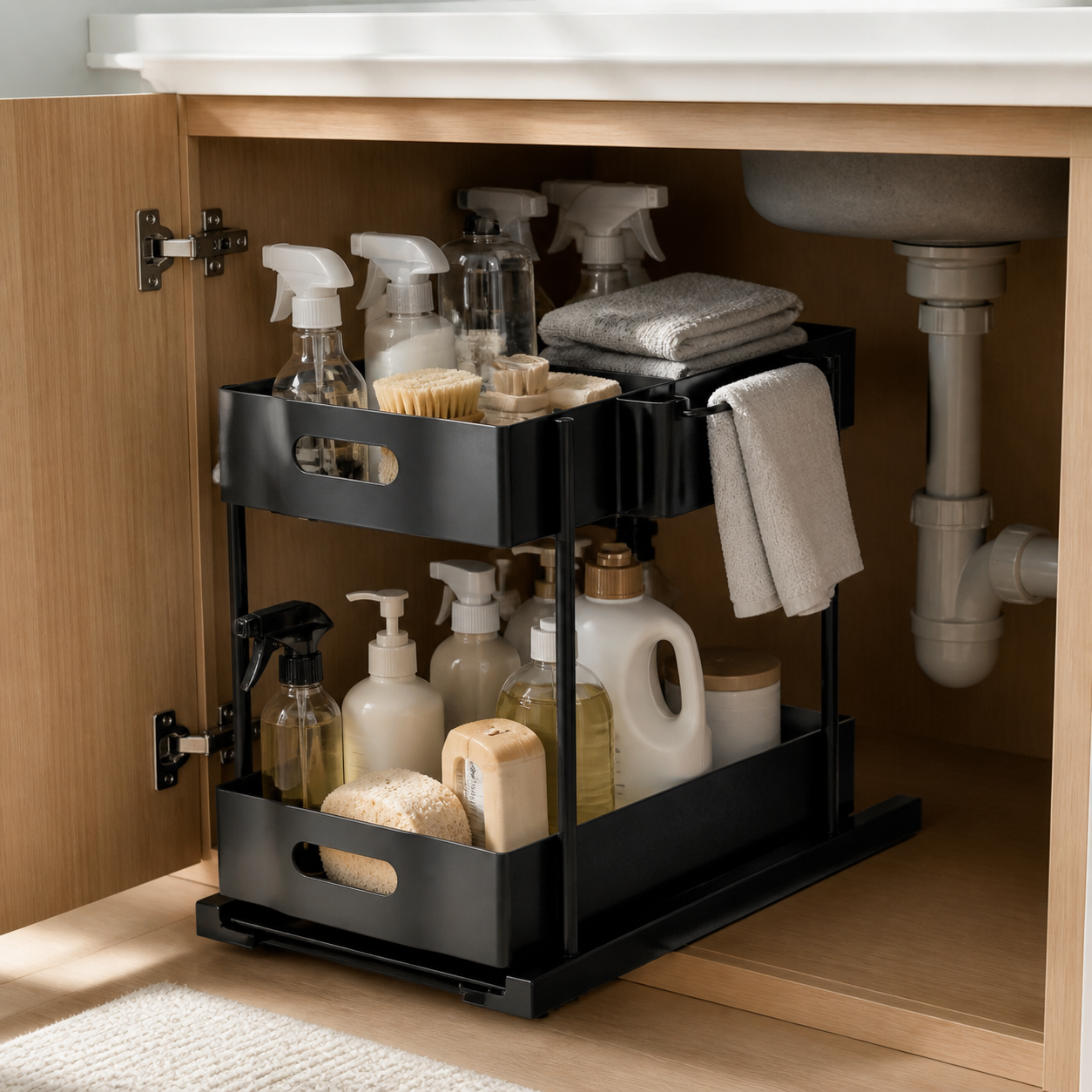
Short answer
For storage inside a small bathroom vanity, measure the clear door opening, uninterrupted width beside the pipes, usable depth, and vertical clearance. The smallest of those limits decides what can enter and sit safely; a countertop sink organizer solves a different problem.
- Measure four clear dimensions
- Use narrow shelves first
- Separate counter and cabinet storage
Quick comparison
| Tight pipe layout | Open-sided expandable shelf | Best when plumbing blocks a fixed shelf |
|---|---|---|
| Daily toiletries | Narrow two-tier organizer | Best balance of reach and a small footprint |
| Deep cabinet | Sliding bin or drawer | Best when small items disappear in the back |
Small-bathroom fit rule
Measure the plumbing first; choose the organizer layout second.
In a small vanity, usable width is the open space beside the trap and supply lines, not the cabinet's outside width. Keep shutoff valves and leak-prone joints visible.- Pipes in the center
- Two narrow binsSeparate bins can sit on both sides without forcing a shelf around the drain trap.
- Pipes offset to one side
- One slim pull-out drawerPlace the drawer on the clear side and confirm it can extend past the door hinge.
- Very low clearance
- Low open caddyA removable caddy is easier to lift out for leak checks than a tightly fitted two-tier frame.
Measurements that decide whether it fits
Record the clear usable space inside the vanity, because the cabinet's advertised outside dimensions do not show plumbing obstacles.
| Measurement | How to take it | What it controls |
|---|---|---|
| Clear door opening | Measure between the hinges or frame at the narrowest point. | The organizer and any pull-out drawer must pass through this opening. |
| Clear width beside the trap | Measure each uninterrupted side of the drain separately. | This decides whether one slim drawer or two independent bins can fit. |
| Usable depth to pipes and valves | Measure from the closed-door line to the first obstruction. | A drawer needs room to close without pressing a hose or shutoff valve. |
| Vertical clearance | Measure the lowest pipe and the tallest bottle you plan to store. | The upper tier must clear plumbing while the lower level still holds daily items. |
Free fit worksheet
Find the largest organizer envelope that can enter your vanity
Enter clear inside measurements in inches. The worksheet uses your smallest physical limit; it does not assume that an advertised cabinet width is usable.Treat this as a listing filter, not a fit guarantee. Keep shutoff valves, hoses, and leak-prone joints visible and confirm the product's outside dimensions before buying.
Measure cabinet width, depth, door opening, pipe height, and hinge clearance before opening a store link.
Popular buying questions
Start with a household problem, then compare the products and stores that fit.
Current verified deals · Buying guides · Compare shopping options
-
Under-sink organizers
Store comparison · Compare Walmart under-sink organizers with Target and other stores while keeping MadeSmart shelves, pull-out drawers, sizes, and pack counts separate.
No two-store verified narrow organizer today
Current retailer rows do not prove the same pack size across two stores, so we are not showing a lowest-price comparison. Use the fit guidance above and wait for a verified exact-product match instead of comparing a one-pack with a multipack.
Compare under-sink layouts and store checks Use the fit and pack-count checklist while no narrow exact product passes the two-store gate.Measure four clear dimensions, not the cabinet door
Small vanities lose usable space to pipes and valves. Measure the clear floor width, usable depth, height below the basin, and open space beside the drain. Use the smallest measurement that affects the organizer, then check the tallest bottle you need to store.
Choose an open-sided layout
A shelf that can work around plumbing is safer than a closed bin. Closed bins look tidy but can waste the exact space small bathrooms need most.
Keep backups separate
Use the organizer for daily items and cleaning supplies. Extra shampoo and unopened products should go in a separate bin so the small cabinet stays usable.
Related buying guides
Common questions
What size organizer fits a small bathroom vanity?
Most small vanities need a narrow organizer under 12 inches wide, but pipe placement matters more than the outside cabinet width. Measure clear floor width, usable depth, height below the basin, and space beside the drain before choosing a size.
Is a small bathroom sink organizer the same as an under-sink organizer?
Not usually. A sink or countertop organizer keeps toothbrushes, soap, and daily items beside the basin. An under-sink organizer uses the cabinet below it and must fit around pipes and valves. Choose based on where the clutter actually sits.
Is a sliding organizer worth it in a small cabinet?
Yes if items disappear in the back. A simple shelf is enough if everything is already easy to reach.
Should I store towels under the sink?
Only if the cabinet stays dry. Cleaning bottles and daily toiletries are usually a better fit.
What should I compare before buying a narrow under-sink organizer?
Compare cabinet width, pipe and valve clearance, shelf height, pack count, color, final delivered price, and return terms. A lower headline price is not useful if the organizer blocks the plumbing or the listing is a different pack size.